


Why Is Frozen Yoghurt Everywhere in London Right Now?
Sep 7th 2026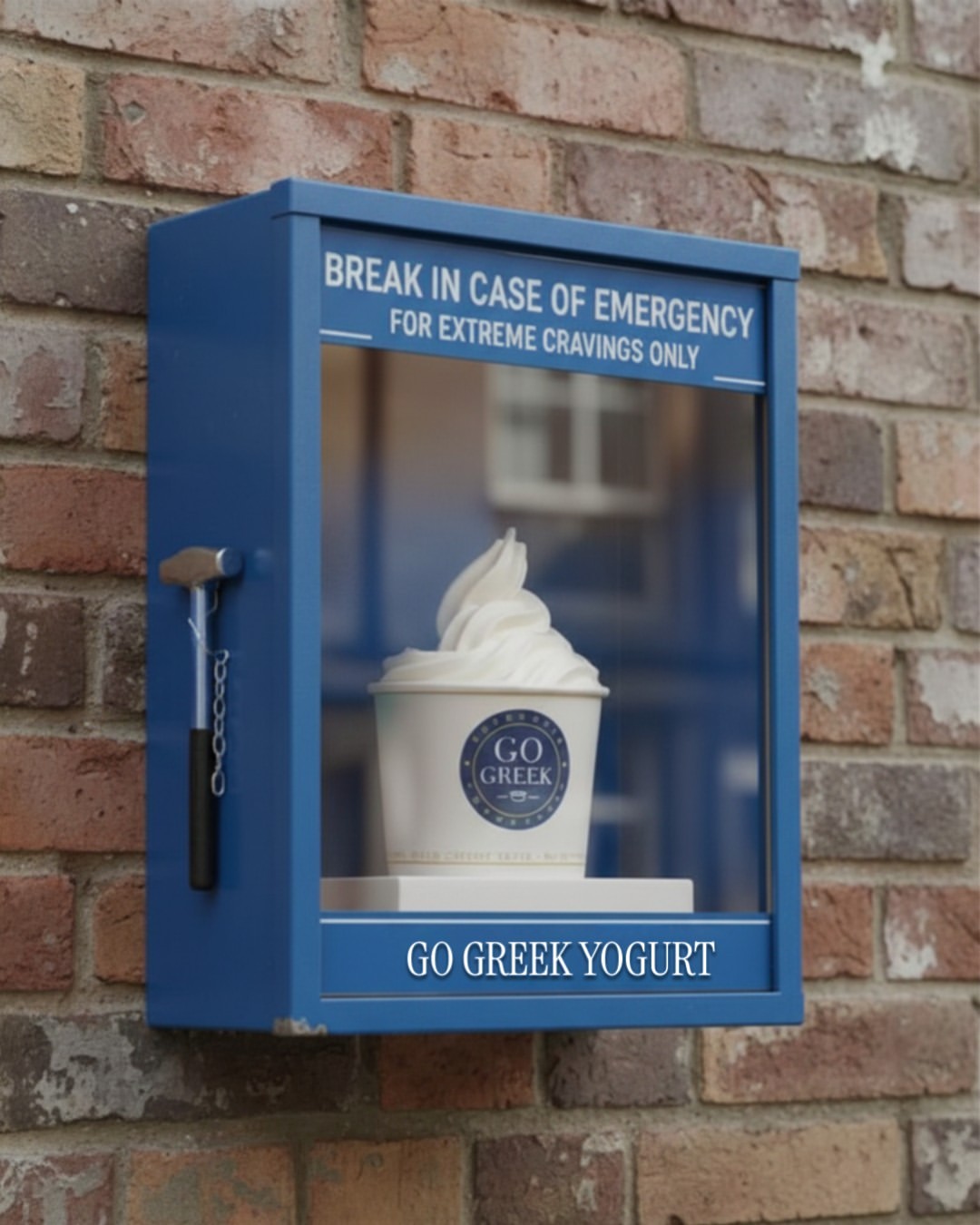
Frozen yoghurt is everywhere in London this summer because four international brands opened here inside eight weeks: Go Greek Yogurt on South Molton Street in Mayfair, Myka on St Christopher’s Place, Yo-Chi on Notting Hill Gate, and Mast at Westfield White City. They came because the format travels well. Self-serve froyo needs no kitchen, few staff and a small unit, and it lets the customer build and price their own product, which makes it one of the most exportable concepts in food.
MeMo runs all the marketing for Go Greek Yogurt in the UK, so treat this as a view from inside the category.
Who has opened
Go Greek Yogurt. 36 South Molton Street, Mayfair, July. Founded in Los Angeles in 2012, 620 sq ft, imported Greek yoghurt, sweet and savoury bowls. The Infatuation’s line on it was that it is for people who want frozen yoghurt to taste like yoghurt.
Myka. 14a St Christopher’s Place, Marylebone, July. Greek, dessert-forward, with olive oil and sea salt sitting on the toppings bar next to pistachio cream.
Yo-Chi. 81-85 Notting Hill Gate, 20 August. Australian, 2,000 sq ft over two floors, room for more than 120, nine yoghurt bases, over thirty toppings, weight-based pricing, a DJ booth. Reported queues six hours before opening.
Mast. Westfield White City, up from Manchester. The domestic entrant, and a reminder this is not only an import story.
Fresko. 44 Bedford Street, Covent Garden. Greek yoghurt only, and it has been there for years, which is worth noting given how much of the coverage this summer has treated the category as brand new.
Why they came to London
London is the default first stop for international food brands, and 2026 has been a heavy year for it. Raising Cane’s took Coventry Street with more sites lined up, Jersey Mike’s has signed franchise agreements aiming at hundreds of UK and Ireland openings, Langosteria opened at The OWO, Tresind arrived from Dubai. Froyo landed inside a much wider queue of arrivals.
The reasons the brands give are worth reading, because they are not the same. Yo-Chi’s entry was pulled rather than pushed. Co-owner Oliver Allis has described UK customers messaging the brand, tagging friends and sending videos asking them to come over, mostly Australians who had moved to London and people who had tried it on holiday. That is a rare position to open from, and it explains the queue better than any marketing did.
Go Greek came at it from the product end. Co-founder Tanja Murgel-Subotic has framed the London site as a step toward Europe and toward the origins of the recipe in Greece, on a continent where yoghurt is already part of daily eating rather than a novelty. Different logic, same conclusion.
Why the format travels
This is the part the trend write-ups tend to skip, and it is the reason four brands could arrive at once.
A self-serve froyo shop is close to the cheapest full concept in food to open and run. No kitchen, no extraction, no chefs, and far fewer staff per shift than a counter-service site, because the customers assemble the product themselves. The unit is small: US operators typically take 1,000 to 1,500 sq ft, and Go Greek’s Mayfair site is 620. That combination makes sites easy to place, quick to fit out and straightforward to franchise, which is what a brand wants when it is aiming at 50 sites globally, as Go Greek is by 2027.
The US operators are noticeably more disciplined this time round. Yogurtland has talked about judging growth by how strong each individual unit is rather than how many it can open, and is working average annual revenue per store from around $875,000 toward $1m. 16 Handles moved average store sales from roughly $660,000 in 2022 to $805,000 in 2024. That is a category being run on unit economics rather than land grab, which is not how the last froyo boom was run.
The customisation is the product
What makes froyo work commercially is not the yoghurt. It is that the customer builds it.
Weight-based pricing means the customer sets their own ticket, and does it while enjoying themselves, which is a very different feeling from being upsold. Nine bases and thirty-odd toppings is not a menu, it is a combination space, so the shop never hits the problem of a regular having tried everything. And because every bowl is assembled by hand and no two look the same, the product arrives already photographable without the brand art-directing anything.
That is why the category behaves the way it does on social. Most food brands have to make content about their product. A froyo shop’s customers make it for them, at volume, in a format that is different every time. Allis has been direct about how central that is to Yo-Chi, describing social as the first, second and third thought rather than an afterthought. Two weeks after opening, the UK Instagram account was past 32,000 followers.
A dessert shop competing with the pub
The demand data is reasonably clear. Circana recorded frozen yoghurt servings up 26% in the year to March. Placer.ai foot traffic shows froyo chains posting positive year-on-year visit growth through most of the first half of 2026, occasionally above 18%, while ice cream shops swung negative and dipped as low as -8.5%.
The number that changes how you market it is smaller. Around 36% of weekly froyo visits now fall on a Friday or Saturday. Ice cream does not concentrate like that. This looks like a planned social outing rather than an impulse buy on a warm afternoon.
Allis put the strategy plainly when he described Yo-Chi as trying to be the pub with no beer, a community spot without alcohol. Read that next to the weekend concentration, a two-storey site, 120 seats and a DJ booth, and the positioning is clear enough.
Why this is not 2011
The first froyo boom died because the shops were interchangeable. Same self-serve machines, same tart base, same toppings wall, so they competed on price until the model stopped working.
This wave arrives differently. Each brand has a country attached, a founder story and a product claim that is checkable. Go Greek imports Greek yoghurt and sells savoury bowls alongside sweet. Fresko has built years on Greek yoghurt alone. Yo-Chi sells a room rather than a cup. Prices are roughly three times what they were in 2012 and nobody is discounting.
Whether that holds is the open question. Premium positioning survives only while the products stay genuinely different, and London now has five shops selling a similar-looking thing within a few miles of each other.
What we saw running one of them
Two things stood out, and neither is the queue.
The first is lead time. MeMo was appointed on Go Greek in March for a July opening. Four months, where six weeks is more common for an international brand landing here. That bought the unglamorous work: UK handles secured, the Instagram grid populated before anyone searched for it, the announcement out to trade in March, window vinyl on South Molton Street through the spring, creator gifting landing before anyone could buy a bowl.
The second is sequencing, and the coverage data shows it. In May and June the coverage is almost entirely trade and consumer press, and the social engagement on it is close to zero, because nobody shares a trade announcement about a shop they cannot visit. In July, when creators came online alongside the press, engagement on that coverage jumped from single figures to tens of thousands. Same brand, same product. What changed was two channels firing in the same weeks rather than separately. The Go Greek case study has the numbers.
Frequently asked questions
Why is frozen yoghurt popular again in 2026?
The product and the price point changed. Frozen yoghurt has repositioned as a premium, high-protein, brand-led social purchase rather than a cheap self-serve dessert. Circana recorded servings up 26% in the year to March 2026, and Placer.ai foot traffic shows froyo visits growing year on year through the first half of 2026 while ice cream shop visits fell. Around 36% of visits fall on a Friday or Saturday, which points to a planned outing rather than an impulse buy.
Which frozen yoghurt brands have opened in London in 2026?
Go Greek Yogurt at 36 South Molton Street in Mayfair and Myka at 14a St Christopher’s Place both opened in July 2026. Yo-Chi opened at 81-85 Notting Hill Gate on 20 August 2026. Mast opened at Westfield White City. Fresko on Bedford Street in Covent Garden predates the current wave.
Why are frozen yoghurt brands expanding internationally?
The format is unusually easy to export. A self-serve site needs no kitchen or extraction, runs on fewer staff than counter service because customers assemble their own product, and typically occupies 1,000 to 1,500 sq ft. That makes units cheap to open, easy to place and simple to franchise. Weight-based pricing also lets the customer set their own spend, which supports a high average ticket without menu engineering.
Where is Go Greek Yogurt in London?
Go Greek Yogurt’s first UK site is at 36 South Molton Street, London W1K 5RH, in Mayfair. The brand was founded in Los Angeles in 2012 and operates more than 20 sites across the US and Middle East, with a target of 50 globally by 2027.
Does MeMo work with any of these brands?
Yes. MeMo has delivered Go Greek Yogurt’s UK launch and ongoing marketing since March 2026, across marketing strategy, press office, influencer, organic social, design, paid social and CRM. We have no commercial relationship with Myka, Yo-Chi, Mast or Fresko.
Talk to us
If you are bringing a brand into the UK, or the opening has happened and the second act needs building, get in touch.